MiKo · Kiwi Brandy
Old Spirit.
New Traditions.
Distilled from mountain kiwifruit (Actinidia chinensis var. deliciosa) grown in its original terroir.
Explore the Source.
One valley in the mountains of Jiangshan — four places that make MiKo what it is. Tap to travel.
The Spirit
What’s in the bottle
A kiwi eau-de-vie distilled from Xuxiang kiwifruit in its original terroir — three ingredients, a copper pot still, and an annual vintage.
- Category
- Kiwi brandy / eau-de-vie
- Fruit
- Xuxiang (徐香) kiwifruit
- Ingredients
- Kiwifruit, water, yeast
- Fruit per bottle
- More than 20 lb
The Fruit That Left China.
A Chinese fruit crossed an ocean, lost its name, and conquered the world. This is how it happened — and how it came home.
Chapter 1 · 700s – 1900
The Monkey Peach
For a thousand years the fruit was wild, Chinese, and named for the monkeys who loved it.

Curtis’s Botanical Magazine (1914) · Public domain, via Wikimedia Commons c. 750A poet writes it down
The first identifiable description of the kiwifruit plant appears in a Tang dynasty poem by Cen Shen. In China the fruit is called míhóutáo (猕猴桃) — “macaque peach” — because monkeys loved it.
- Song dynasty herbal manuscript (placeholder)1100s
Cultivation and medicine
Song dynasty records document cultivation and medicinal use. The vine is no longer only foraged from the forest; it is tended, valued, and written into the pharmacopoeia.

Li Shizhen, Bencao Gangmu (1603 ed.) · Public domain, via Wikimedia Commons 1500sInto the great compendium
The fruit is recorded in the Compendium of Materia Medica. It grows wild across the Yangtze basin — including the mountains of Jiangshan, where this story eventually returns.

The Source
The Orchards
Xuxiang (徐香) kiwifruit grown at elevation in the hills around the village. Named for the Xu family who first cultivated it; locals also call the green kiwi Cuiyu (翠玉, “jade”).
More than twenty pounds of fruit go into every bottle. Annual harvests mean every bottle carries a vintage — a specific year, a specific season, on a specific hillside.


The People
The Village
Guangdu Cun (广渡村), a village of roughly a thousand people in the hills of Jiangshan.
Here, surplus and imperfect fruit has been distilled into spirit for generations — the family recipe MiKo is built on. Nothing about it was invented for a label; it was already the way things were done.


The Landscape
Jianglang Shan
Three red-rock Danxia peaks rising above the orchards — a UNESCO World Heritage site, inscribed in 2010.
The nearby Xianxia ancient road is known as the “Road of Poetry of the Southern Song,” with over a thousand classical poems written along it. The terroir has been worth writing about for a very long time.
The Craft
The Distillery
In Jiangshan City, we distill in copper pot stills and rest the spirit in traditional clay pots.
Three ingredients: kiwifruit, water, yeast. Nothing hidden.


The Ritual
How to Serve
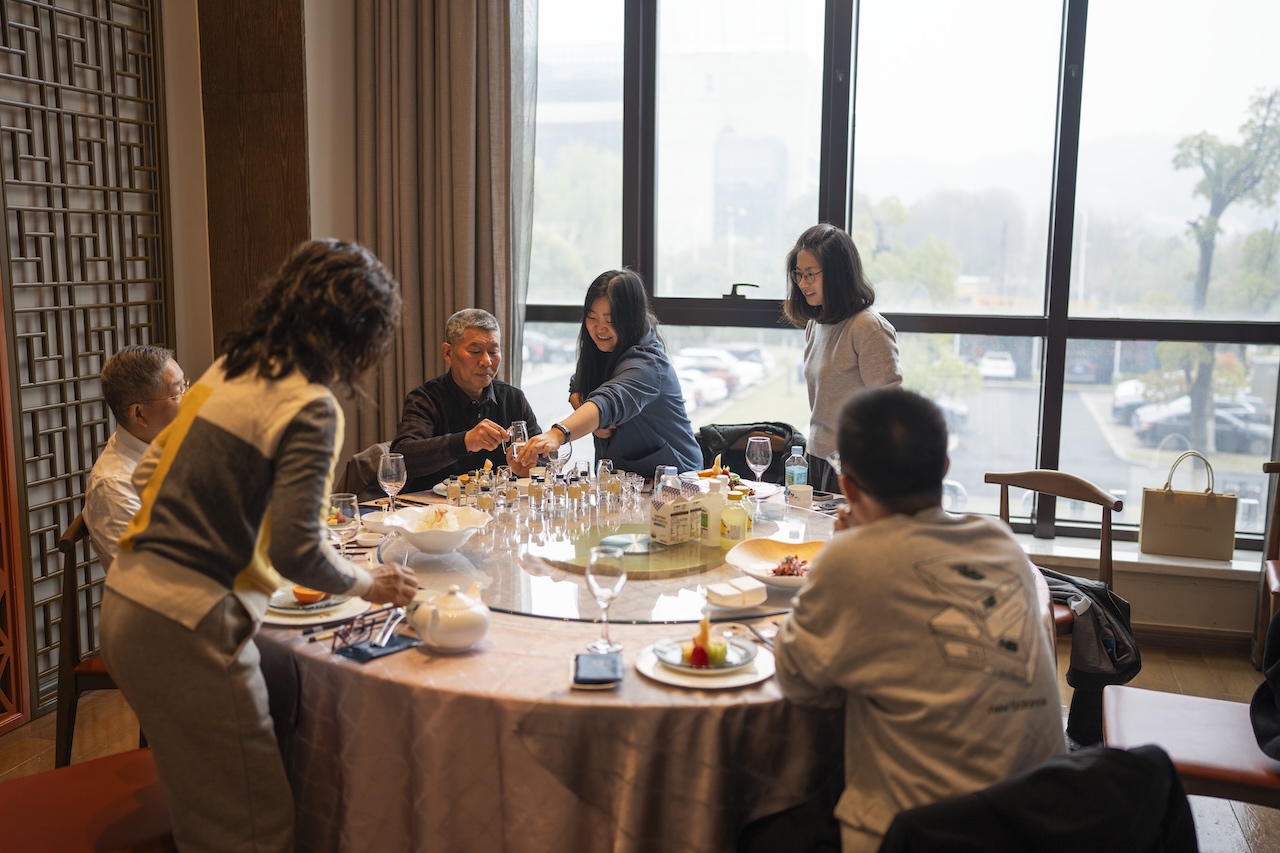
Quzhou is the seat of the Southern Confucius family. Ritual — li (礼) — is the quiet machinery by which an ordinary act becomes a meaningful one. A pour becomes a welcome; a glass becomes a gesture.
Serve MiKo neat, at cool room temperature, in a small tulip glass. Let it open for a minute; the aroma arrives before the spirit does.
Or over a single large cube, with a twist of green citrus — a slower way to meet the fruit. However you pour it, pour it for someone.
Send yourself a postcard.
Pick a view from Jiangshan and we’ll mail you a real one — and let you know when MiKo is ready.

The Village
Wish you were here. — Guangdu Cun, Zhejiang.
On the list, you’ll get
- Exclusive access to launches
- Invites to private events
- Recipes, stories, and behind the scenes